

Intermittent No Start Problems Explained

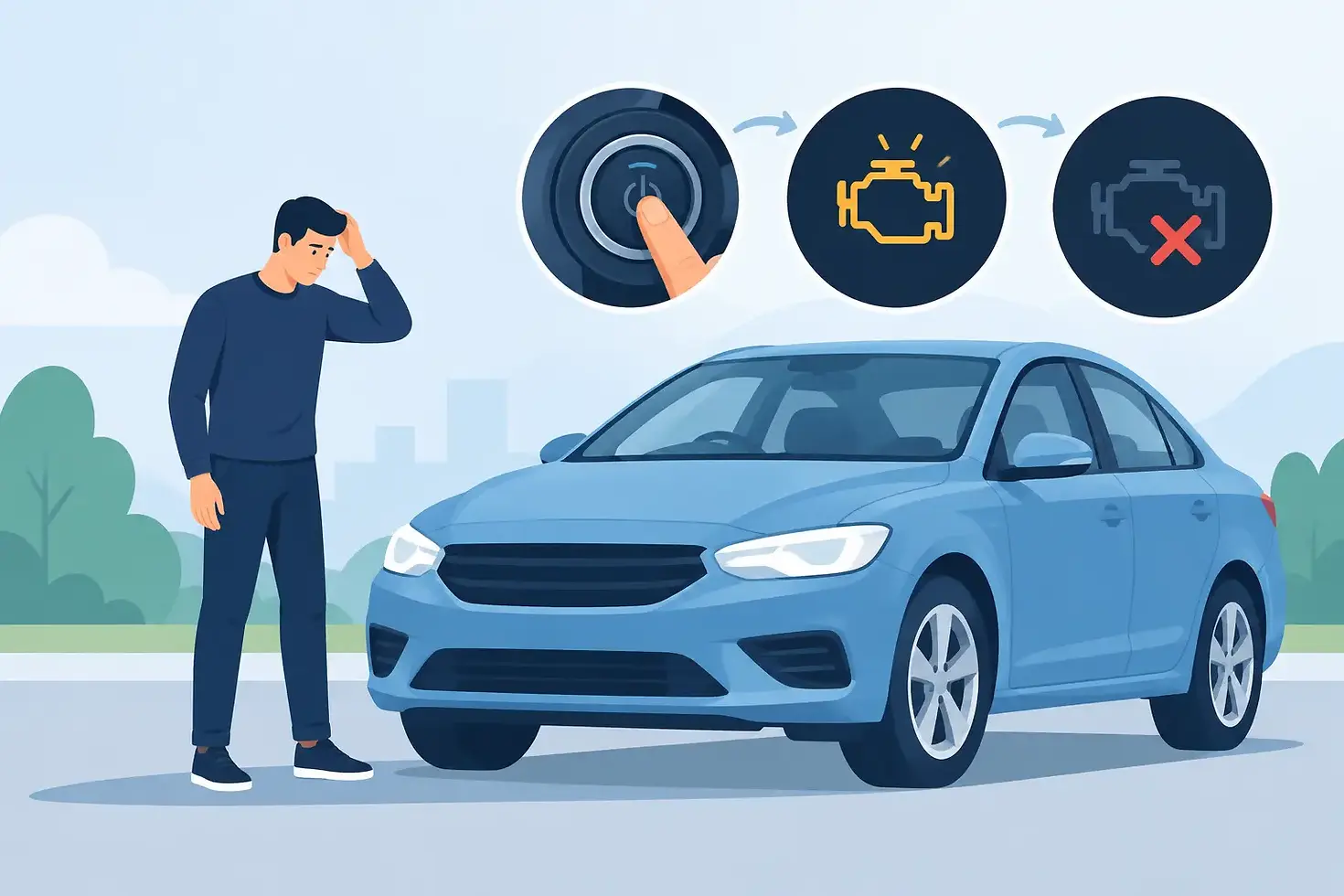
Your car starts perfectly at home, then refuses to start after a quick stop at the store. Ten minutes later, it fires right up as if nothing happened. An intermittent no start is frustrating because the problem can disappear before anyone gets a chance to test it. It is also a warning worth taking seriously. The next time, you may be stuck in a parking lot, driveway, or on the way to work.
The good news is that intermittent starting problems can be diagnosed. The key is separating the symptoms, gathering the right details, and testing the vehicle while the fault is present or with evidence left behind in the system.
What an intermittent no start usually means
"No start" can describe two very different situations. In one, you turn the key or press the start button and the engine does not crank at all. You may hear a click, repeated clicking, or complete silence. In the other, the engine cranks normally but does not actually run.
That distinction matters because each version points to a different set of systems. A no-crank condition often involves the battery, battery cables, grounds, starter, ignition switch, park/neutral safety switch, clutch switch, or starter relay. A crank-but-won't-start condition may involve fuel delivery, ignition spark, engine timing, a sensor signal, or an anti-theft system issue.
An intermittent problem does not automatically mean a major repair. A loose battery terminal, a corroded ground connection, or a relay with worn internal contacts can create a problem that comes and goes. On the other hand, occasional failure can also be the first sign of a fuel pump, starter, crankshaft position sensor, or ignition switch reaching the end of its service life.
The details you notice can narrow down the cause
When the vehicle will not start, the most useful information is often simple. Listen for what happens when you attempt to start it. Does the dashboard light up normally? Do the headlights dim heavily? Is there one click, rapid clicking, or no sound at all? Does the engine crank at normal speed?
Pay attention to the conditions around the failure, too. Some cars act up only after the engine is hot, while others struggle after sitting overnight. Portland's damp weather can expose weak electrical connections, especially at battery terminals, grounds, fuse boxes, and connectors. A vehicle that fails only when parked on an incline or with a low fuel level may point technicians toward fuel delivery instead.
If your car has a push-button start, try the spare key fob if you have one. A weak fob battery or key-recognition issue can occasionally prevent starting, though it is less common than a battery, starter, or electrical problem. With an automatic transmission, try starting in Neutral while holding the brake pedal. If it starts in Neutral but not Park, the park/neutral switch or shifter-related adjustment deserves attention.
Do not keep cranking the engine repeatedly for long periods. Extended cranking can drain the battery, overheat the starter, and make a straightforward diagnosis less clear. If the engine cranks but will not start, a short video of the instrument panel and the sound it makes can be genuinely helpful during diagnosis.
Why a battery test alone may not solve it
Many intermittent no start complaints begin with a battery replacement, and sometimes that is the correct repair. But a battery can test acceptable at rest and still have a connection issue, a charging issue, or a voltage drop under load. The battery is only one part of the starting circuit.
Battery terminals should be clean, tight, and free of swelling or heavy corrosion. Cable corrosion can also hide under the insulation, where it is not visible during a quick look. A weak ground strap between the engine and body can cause slow cranking, clicking, strange dash behavior, or a complete no-crank condition.
The alternator matters as well. If it is not consistently charging the battery, the car may start after a jump or after sitting for a while, then fail again later. That does not necessarily mean the battery itself is bad. Proper testing checks battery condition, charging output, cable voltage drop, and the current demand of the starter rather than guessing from one reading.
How an intermittent starting problem is diagnosed
A reliable diagnosis starts by confirming whether the engine is failing to crank or cranking without starting. From there, a technician checks for battery voltage, power and ground at the starter, relay operation, control signals, and voltage loss across cables and connections. For a crank-no-start complaint, testing may include checking for fuel pressure, injector command, ignition spark, security-system status, and engine sensor data.
Computerized diagnostics are useful, but a scan tool is not a magic answer. Trouble codes can point in the right direction, yet some intermittent faults do not store a code. A failing crankshaft position sensor, for example, may lose its signal only when hot. A fuel pump may lose pressure only after running for a certain amount of time. A starter may fail only after heat from the engine soaks into it.
That is why testing live data and electrical circuits matters. A technician may monitor the command sent to a starter relay, inspect whether the engine computer sees cranking speed, measure fuel pressure during the failure, or perform voltage-drop testing while the starter is under load. These checks identify whether a part is actually failing or whether the problem is in the wiring, connection, or control side of the circuit.
There is a trade-off with intermittent issues: the vehicle may behave normally at the shop. Clear notes about when it fails, how long it sits before restarting, warning lights, recent repairs, and any jump-start history can save time. If you can safely leave the vehicle in its failed state rather than repeatedly trying to start it, the odds of catching the problem improve.
Common causes, from simple to more involved
Loose battery connections and poor grounds are common and often less expensive to correct than a failed component. Worn starter motors and starter solenoids are also frequent culprits, particularly when the vehicle clicks once or starts only after several attempts.
Fuel-pump problems can show up as long cranking, a crank-no-start condition, stalling, or a vehicle that restarts after cooling down. Faulty relays can mimic a failed pump because they intermittently stop power from reaching it. Ignition switches, key-recognition systems, and park/neutral switches can also interrupt the start command before the starter ever receives power.
Engine sensors are another possibility when the engine cranks normally but will not run. A crankshaft or camshaft position sensor that drops out can prevent the engine computer from coordinating spark and fuel injection. These faults may be heat-related and may not trigger a warning light every time.
When to stop trying and arrange service
If you smell fuel, see smoke, notice melted wiring, or hear grinding from the starter area, stop attempting to start the vehicle. The same goes for a battery that is swollen, leaking, or repeatedly going dead. Those symptoms need inspection before further driving or jump-start attempts.
If the car starts after a jump, do not assume the issue is resolved just because it runs. It may have a weak battery, poor connection, parasitic electrical draw, or charging-system problem. A quick check now is usually easier than waiting for the vehicle to strand you again.
For Portland drivers, Dane Motors can diagnose intermittent starting and electrical problems with the same practical approach used for routine repairs: verify the symptom, test the system, and explain what failed before recommending the repair. Bring the details you noticed, and let the evidence guide the fix. A starting problem that only happens once in a while is still your car asking for attention - it is best to answer before it chooses the worst possible time.


Comments