


Pre Purchase Car Inspection Portland Buyers Need

A clean interior, fresh oil change sticker, and a short test drive can make a used car feel like a good deal. A pre purchase car inspection Portland buyers arrange before signing gives you something better than a feeling: a clear look at the vehicle's condition, likely repair needs, and whether the asking price still makes sense.
Used vehicles can hide expensive problems surprisingly well. A seller may not know a concern exists, or may describe a warning light, vibration, or intermittent starting issue as a minor quirk. An independent inspection gives you time to make an informed decision while you still have the option to walk away.
Why a pre purchase car inspection in Portland is worth it
The cost of an inspection is small compared with buying a car that needs brakes, tires, suspension work, a transmission repair, or electrical diagnosis right away. Even a vehicle that starts easily and drives smoothly for 15 minutes can have trouble codes stored in its computer, fluid leaks underneath, uneven tire wear, or damage from a previous collision.
Portland driving adds its own considerations. Stop-and-go commuting, wet roads, potholes, steep hills, and long periods of sitting in traffic all put wear on different systems. A car that has spent years in the Pacific Northwest may not have the severe corrosion seen in areas with heavy road salt, but its underbody, exhaust, brake lines, seals, and suspension still need a close look. Water intrusion from clogged drains, worn weather seals, or a sunroof leak can also create electrical problems that do not show up until the next rainy week.
A pre-purchase inspection does not turn a used car into a guaranteed car. No shop can predict every future failure. What it can do is identify visible concerns, active and stored fault codes, current safety issues, and repairs that appear likely based on the vehicle's condition. That information gives you leverage to negotiate, budget for needed work, or keep shopping.
What a pre purchase car inspection Portland shops should cover
A useful inspection goes beyond a quick glance under the hood. The technician should evaluate the systems that affect safety, reliability, and the true cost of ownership. The exact scope can vary by vehicle, its age, and the seller's location, but the inspection should address the major mechanical and electronic areas.
Computer diagnostics and warning lights
A dashboard with no warning lights is a good start, not a final answer. Modern vehicles store diagnostic codes that may point to engine, transmission, emissions, airbag, ABS, charging, or sensor problems. A scan can show current faults, pending issues, and whether key readiness monitors have recently been reset.
That last detail matters. If a seller recently disconnected the battery or cleared codes, the check-engine light may stay off temporarily even though the underlying issue remains. Diagnostic scanning can help separate a genuine clean bill of health from a vehicle that simply has not completed enough drive cycles to reveal a problem.
Engine, transmission, and fluid condition
The inspection should look for oil leaks, coolant leaks, fuel smells, damaged hoses, worn belts, and evidence of overheating. Fluid level and condition can offer useful clues, although clean fluid alone does not prove a component is healthy. A freshly detailed engine bay can hide leaks just as easily as it can show that an owner cared for the vehicle.
During a road test, a technician listens and feels for problems that are easy to miss when you are focused on the purchase. Rough idle, hesitation, misfires, delayed shifting, slipping, harsh engagement, unusual engine noise, and excessive smoke all deserve attention. On hybrids and electric vehicles, the inspection should account for the specific battery, charging, cooling, and high-voltage systems involved.
Brakes, tires, steering, and suspension
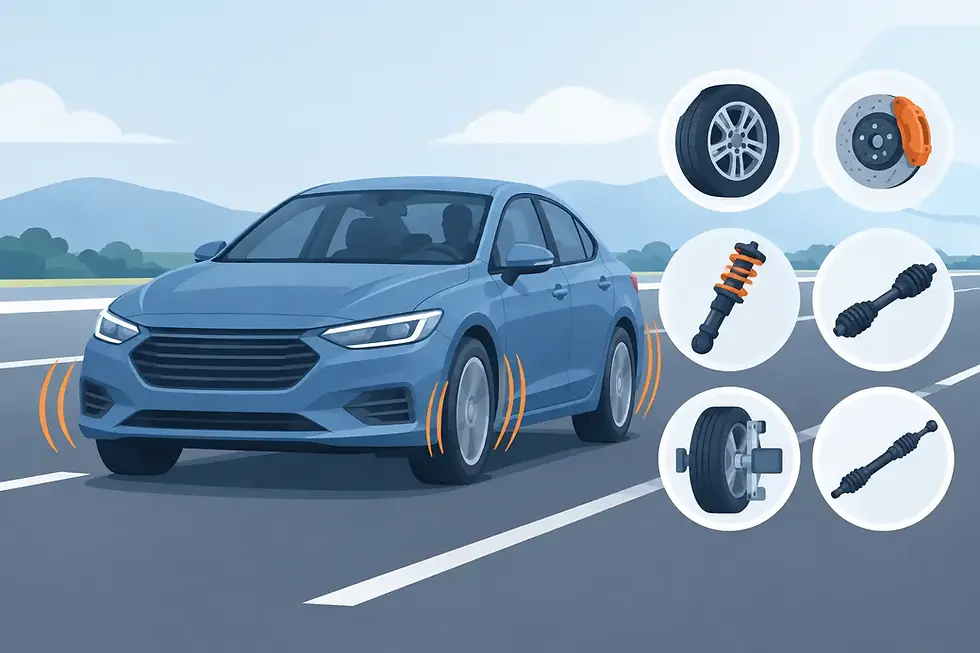
These are the parts you rely on every time Portland traffic stops suddenly. Brake pad thickness, rotor condition, caliper operation, tire tread depth, tire age, and uneven wear all help establish what work may be due soon. Tires can look acceptable at a glance while wearing badly along the inside edge, which may point to an alignment or suspension issue.
Steering and suspension checks can uncover worn ball joints, tie rods, control arm bushings, wheel bearings, struts, shocks, and CV axles. A clunk over rough pavement or a pull under braking may be more than an annoyance. It can affect handling, tire life, and safety.
Underbody, body, and prior repair evidence
A lift inspection is valuable because many costly issues live underneath the car. The technician can look for fluid seepage, exhaust damage, loose shields, bent components, rust, and signs of impact. They can also identify repairs that suggest prior collision damage, such as uneven panel gaps, overspray, mismatched paint, or non-factory fasteners.
Previous repairs are not automatically a reason to reject a car. A properly repaired accident vehicle can still be a solid purchase. The question is whether the repair quality appears sound and whether there is evidence of structural damage, poor alignment, water intrusion, or ongoing mechanical trouble.
What to do before scheduling the inspection
Ask the seller if they will allow an independent inspection before purchase. A reasonable private seller or dealer should expect the request, especially on a higher-value vehicle. If someone refuses, pressures you to skip it, or insists that their own inspection is enough, treat that as useful information.
Get the vehicle identification number, current mileage, and service records if they are available. Records can show whether routine maintenance was performed, but they should support an inspection rather than replace one. A stack of receipts does not confirm the present condition of the brakes, suspension, battery, or transmission.
Schedule the inspection before handing over a deposit that you cannot recover. If time is tight, explain that you are working around a seller's availability. Dane Motors can inspect vehicles of all major makes and models and explain the findings in plain terms, so you know what needs attention now, what can be monitored, and what the repair priorities may be.
How to use the results without overreacting
Most used cars will have some findings. A ten-year-old vehicle with worn wiper blades, aging tires, a small oil seep, or brakes approaching replacement is not necessarily a bad buy. Those items become a problem when the seller's price leaves no room for them, or when several expensive needs appear at once.
Look at the report in three categories: safety issues, repairs needed soon, and maintenance to plan for later. Safety concerns and major drivetrain problems deserve the most weight. Routine maintenance may be manageable if the car is priced fairly and otherwise fits your needs.
It also depends on how long you plan to keep the vehicle. A commuter car you need to rely on every day should have a different standard than a low-cost project vehicle for someone with time, tools, and a repair budget. Be honest about your own tolerance for downtime. A good deal is not good if it leaves you without transportation two weeks later.
The inspection can save more than repair money
A thorough pre-purchase inspection can save time, stress, and the awkward feeling of discovering a major issue after the title has changed hands. It gives you a practical basis for asking the seller to adjust the price, complete a repair, or provide better documentation.
Bring the vehicle in before the final decision, listen to what the technician finds, and give yourself permission to pass if the numbers do not work. There will be another car. The right one should make sense on the lift as well as it does in the driveway.


Comments